Nutrition Fellowship Programme for Adolescents and Youth by engaging adolescents and youth in Madhya Pradesh
Posted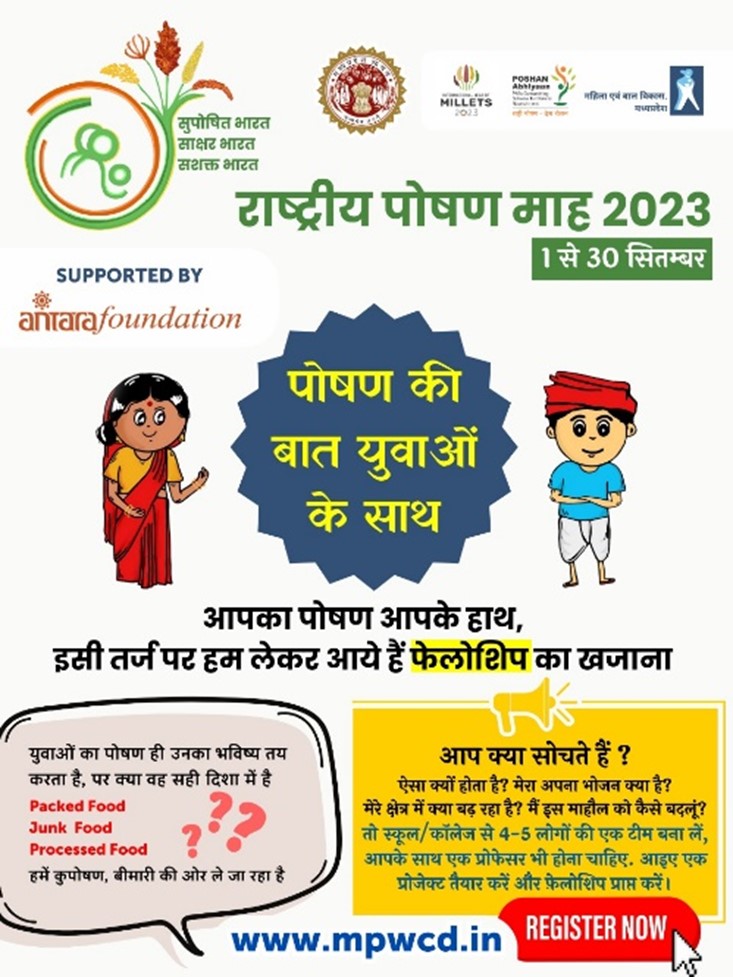
Nutrition Fellowship Programme for Adolescents and Youth by engaging adolescents and youth in Madhya Pradesh
Nutrition Fellowship Programme for Adolescents and Youth by engaging adolescents and youth in Madhya Pradesh
Adolescence is a critical transition period of growth and development from childhood to adulthood. During this phase, adolescents typically establish behavioral patterns related to diet, physical activity, substance use, and sexual activity that can have long-lasting impacts on their health. Improving adolescents' health behaviors is crucial not only for their current and future well-being but also for the health of their future children.
Good nutrition and healthy practices plays a vital role in all aspects of development and disease prevention. However, recent data shows significantly low consumption of nutritious diets among adolescents. Peer pressure often leads them to opt for outside and junk food. To promote nutrition, it is essential to engage adolescents and youth in the POSHAN Maah to create awareness of nutritious homemade food, and dietary diversity and to get their ideas on how to prevent anemia. To address this issue, and to raise awareness of nutrition among adolescents, this project was designed. It aims to empower adolescents to become messengers of healthy food habits, promoting the benefits of good nutrition within their communities.
The project has achieved significant milestones in promoting nutritional awareness and healthier food choices at the district level.
Overview:
According to NFHS-5, 58.1% of adolescent girls (15- 19 years) and 30.5% of adolescent boys (15- 19 years) are anaemic in Madhya Pradesh. Anaemia affects 32% of girls 10-14 years and 48% of girls 15-19 years in India. Among boys 10-19 years old, 20% are anaemic. [1]Only 2 out of 5 adolescents (45%) take milk in their daily diet. Only 1 out of 5 adolescents (20%) take pulses and green leafy vegetables. Less than 1 out of 5 adolescents (<10>oor diet and lack of physical activity are strongly linked to non-communicable disease risk. Peer pressure also has a major impact on them in terms of taking outside and junk food. When compared to younger children, teenagers consume more meals out than at home. The steep increase in issues such as anemia, overweight, and obesity in this age group puts nutritional issues among the greatest immediate threats to adolescent health. The combined factors that shape diet can include personal factors, such as taste preferences and knowledge of healthy foods; social influences like friends, families, and co-workers; and physical surroundings, including stores and advertising. The risk for chronic diseases such as hypertension, diabetes, and chronic kidney disease is increasing over time.
There is an urgent need to counsel girls and women in the state and spread awareness of healthy food habits. The unique role of adolescents means they can be effective agents of change to improve the health and nutrition of their families, peers, and communities. Governments and development organizations should expand their perception of adolescents as a target for health, nutrition, and development initiatives. Adolescent eating decisions will have an impact on both your current and future health throughout this time. Adolescents' health needs are often ignored, and it can be difficult to engage in behavior change.
Therefore, Department of Women and Child Development has taken the initiative with the support of the The Antara Foundation in the POSHAN Maah to run the nutrition fellowship program for adolescents and youth in different colleges by engaging them in the project preparation on district-specific issues and solutions related to nutrition.
Preparatory Phase:
The guideline issued to all distict officials by dthe epartment. To create awareness of this initiative and fellowship a poster was circulated in government colleges for their registration and participation of those who were interested in doing project work.
There are some steps followed under this phase
- Registration of participants (Group) through Google form : Atleast five members were compulsory in a group from a college and there should a leader he/she must be principal/professor of this college.
- Orientation of participants regarding the fellowship program: After registration of colleges, a Zoom call was set up for orientation of this fellowship program, project template, and the need to start this project in MP. Dr. Amita Singh, a Nutrition Expert spoke about the importance of nutrition, health, and nutritional issues especially of adolescents, how to develop healthy food habits and healthy life, and locally available foods.
Then all participants were oriented on the template for preparing projects from their district specific. The following themes were focused on:
- Causes of anemia due to food habits and peer pressure
- Dietary diversity /local foods on district-specific
- How adolescents can create better awareness in the community for promoting good health and nutrition
Sharing of the template with participants for preparing the project:
Methods and activities for collecting district-level information:
Individual or in-person discussion, group discussion with adolescents /youth, interview with key stakeholders at village and panchayat level, schoolteachers, Discussion with Front line workers (ASHA, ANM, Anganwadi workers), etc.
Sample size for the project:
A few activities at least should be done with 2 groups, either group discussions with adolescents and youth at the college level or community level. In each group, 10 to 12 members should be there. Nine groups from different districts were followed the template and collected secondary and primary data on district-specific along with plan and strategy. 40 to 45 participants were covered under nine groups from Chhindwara, Morena (2), Gwalior(2), Damoh (2), Annupur, and Mandsar.
Dr. Amita Singh, nutrion expert, evaluated all written projects based on the clarity of the message, content, field-based experience of group discussions, evidence, new ideas, and strategic plans for the districts. Seven groups from Gwalior, Morena, Damoh, and Chhindwara presented their project work through virtual mode. The jury selected the following four best groups for the nutrition fellowship award.
Four best groups from colleges
- Government College of Nursing GRMC, Gwalior (1st )
- Ambah college of Ambha, Morena (2nd)
- Gyanchand Mahavidyalay, Damoh (3rd)
- Government Girks College, Chhindwara(4th)
- participate.
- Participants were tried to submit the project but they discussed with school children about the nutrition status which was not part of the project.
- Mobilization was big issues in the districts. Groups were mainly from districts where DPs are working and taking extra efforts.
Opportunities
- Received good facts on nutritional status, challenges, solution and district specific locally available foods that can be promoted
- Connect with District officials to encourage locally available nutritious foods
- Guidelines on district specific for starting of new innovation with DPs and Govt through partnershhips
- Media articles or blogs or articles on district specific findings on statregy and locally available foods and innoations
- Engaging adolscents and youth of best four groups in the district level forpromoting nutrition through different platform by DPs and WCDs.
- Recipe book on corn for Chhindwara which is locally and nutritiuous with support of DM
- Encourage and initiate healthy food at the college canteen, Morena.
- Promote morenga paranta and drum stick in Gwalior which is best in nutrition.
- Media article for Damoh regarding awareness of heathy by focusing on the research-based project.
Way Forward:
This fellowship program encouraged and engaged adolescents and youth in compiling district-specific information. Their ideas and innovation on solution-based approaches for nutrition promotion were well documented at the State level, which can be used for ready reference and will help in the planning level. It will motivate youth to share their experiences on different platforms at block, district, and State levels.